

2026/04/18 Shy Girl and the Use of AI in Writing
Recently, the publishing world has been abuzz with news surrounding a particular book, and not for the best reasons. Mia Ballard’s horror novel Shy Girl has been through a whirlwind journey that is every author’s dream-turned-nightmare. The novel, which was originally self-published, was eventually picked up by Hachette, one of the Big 4 of publishing. Reviews followed, both rave and poor. But then things took a turn for the worse.
Mia Ballard & AI
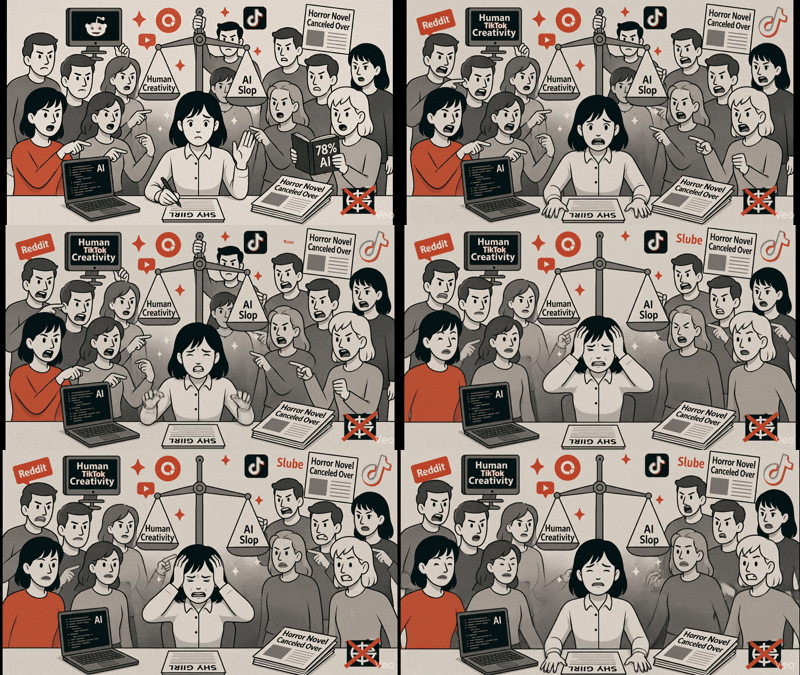
Ballard was accused of having used AI to write her story. It enraged readers (and other authors), who expect stories to be the fruit of human creative labour.
Incidentally, it wasn’t the author’s own admission or the use of AI-detection tools that fueled this accusation. It was the novel’s prose, described by some people online as verbose, difficult to follow, and laden with phrases, similes, specific punctuation marks, and sentimentality that are considered hallmarks of AI-generated writing. The following is the opening paragraph of the novel, which apparently gave it away:
I wear a pink dress, the kind that promises softness and delivers none. Its tulle is brittle and sharp, brushing against my fur like a thousand tiny teeth, a cruel lover that bites with every move. Every scratch keeps me in place, a reminder of what I am: a pet, a thing shaped for looking, for praise, for command. The bows on my pigtails pull too tight, yanking the skin and stretching my head into something neat, into something pleasing, a quiet violence made beautiful. White socks climb my legs, their frills delicate, a whisper of innocence over the bruises beneath, the ones he says shouldn’t happen if the socks are there—but they always do.
If you ask me, it isn’t just the prose that is problematic. Before the rise of AI, it wasn’t unheard of for publishers, literary critics, and readers to attack an author’s writing. In this case, however, the issue goes beyond the book’s cover.
The Author’s Reaction
Following the accusation, Ballard went ahead to shift the blame to her editor, claiming that it was her editor, not she, who had relied excessively on AI. This raises several questions.
When (if at all) is the use of generative AI and LLMs acceptable in writing, and how much? Is it only to the extent that it doesn’t get caught, or should full transparency be normalised and encouraged?
Should authors be allowed to use AI to compile their scattered thoughts into a rough first draft and then painstakingly revise and edit their prose to make it shine? Or is the use of AI in the editorial stage acceptable for technical purposes, thus retaining the author’s agency?
In either case, the fact remains that post-AI books should be more readable and reader-friendly than their predecessors. And the onus of this lies not on AI, but on authors and editors alone.
The article is researched and composed by Saily Bhagwat.