

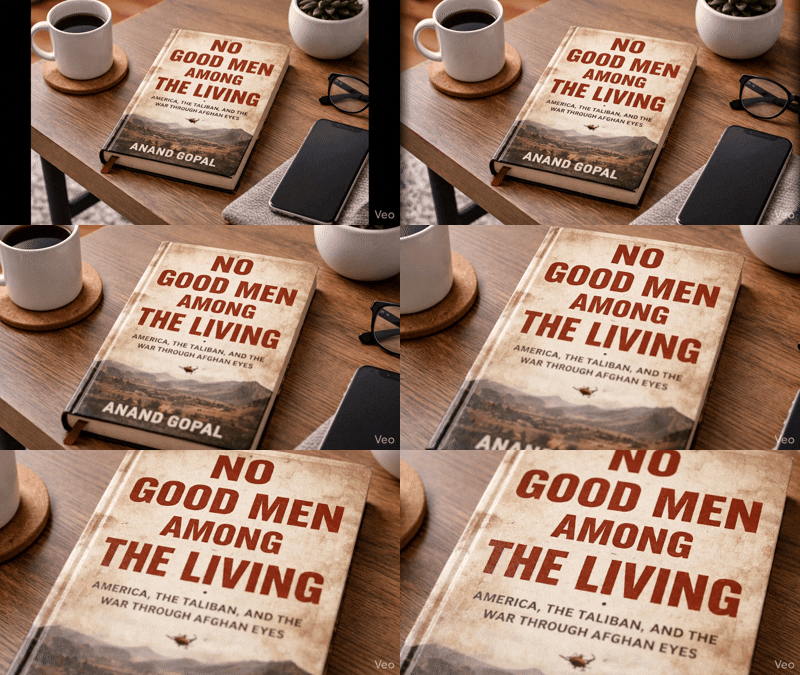
2026/04/18 No Good Men Among the Living
In the present wartime, it is natural to be anxious about its impact on our lives. Revisiting books on war may provide some insight into how wars have affected people throughout history. Today’s book is No Good Men Among the Living, written by Anand Gopal and published in 2014.
No Good Men Among the Living is narrated by journalist Anand Gopal, who risked his life to embed himself in Afghanistan during its war with the United States. We see the story of a war-torn Afghanistan through three diverse perspectives.
The first is the perspective of Mullah Cable, a Taliban commander nicknamed for his use of cords to whip locals. As someone suddenly thrust into a position of power, Mullah finds himself navigating a rapidly shifting political landscape after the American invasion. Mullah is forced into a life of wandering and combat as American-backed warlords begin to target former Taliban members who had tried to surrender. His proximity to constant suffering and the death of his ideals strips away his earlier motivations, replacing them with a primal focus on endurance and the harsh realities of a never-ending cycle of violence.
Meanwhile, Jan Ahmed, a US-aligned warlord, enters the conflict seeking honor, influence, and the greatness afforded by being on the winning side of a global superpower. He initially sees the invasion as an opportunity for his own advancement. But the reality of the war, as characterized by corrupt night raids and the settling of personal agendas, eventually renders his ‘heroic’ status empty.
But among the most memorable of these stories is perhaps the story of Heela, a common Afghan woman. She is an educated woman with a progressive family background and hopes for a bright future. But the war takes her husband and tears her family apart, forcing her to flee her home. She witnesses the suffering and loss of her community directly as she navigates a world where her rights are caught between two warring factions. The war forces Heela to develop a deep emotional resilience as she transitions from a victim of circumstance to a community leader focused on survival and connection.
Across all these characters, No Good Men Among the Living weaves a common thread: the American invasion of Afghanistan and the subsequent Taliban resurgence did not follow a simple ‘good vs. evil’ arc. The war redirected lives away from everyone’s original ambitions and toward a desperate quest for survival and meaning. Ultimately, this isn’t just the story of America, Afghanistan, or the Taliban. It is a cautionary tale of the costs of playing God, and how misguided attempts to fix things can often break them further. It also goes to show how war and strife in a nation, caused by both internal and external agents, can make or break great characters amongst its people.
The article is researched and composed by Saily Bhagwat.