

2026/05/06 Why AI Won’t Replace Human Authors
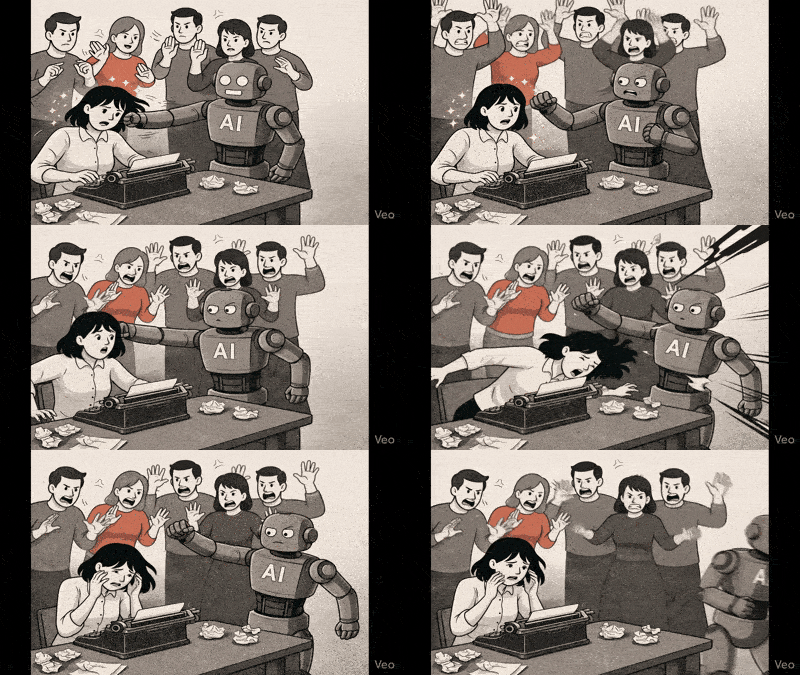
There is an increasing hubbub about authors using AI tools to produce works that go on to become massively popular and even win awards. With this background, it is natural to wonder: Is AI poised to take over a majority of writing? What if it makes human authorship redundant?
Sure, the backlash such authors receive shows that people demand writing that is the fruit of human intellectual labour. But does it go beyond that?
Throughout history, the duty of an author has gone beyond writing a book and getting it published. Writers have made themselves known in the public sphere by voicing their opinions on current events, sharing their life stories, giving public interviews, and conducting book readings. Not only do such activities add the much-needed “human touch” to literature (and help with marketing), they also influence how the author’s work is perceived and received by the public. People want to know what an author’s childhood was like and how it might have led them to write a particular character or scene. They want to know what moved the author in their life, what inspired them, and what hurt them. Why? Because it isn’t just about the story the author writes, it is also about the author’s story itself. Because people like to see themselves not only in the authors’ work but also in the authors themselves, mainly in the success stories that brought them where they are. People want to know that there really is a life beyond drudgery, and that a person like themselves can achieve greatness and immortality through their creativity.
Not only do people want to listen to and hear from authors, but they also want to interact with them. They want to idolise them. They want to criticise them. They want to create a collective culture where people come together or are divided in support or opposition of an ideology. A cult. They want to create groups where they can belong and connect in dialogues with people over things created by people. Ultimately, it isn’t about the work or its author for too long, but about the people themselves. And while the people are happy to be influenced by other people (and many times by machines), we are yet to get to the point where people happily rally for a robot.
To sum up this discussion, here’s a quote by Eleanor Roosevelt, ‘Great minds discuss ideas; average minds discuss events; small minds discuss people.’ And as much as we all like to think otherwise, most of all are still confined to small minds. But that alone might be the reason why every work will require the backing of a human creator in the foreseeable future. No matter what the role of AI is in its creation.
This article was researched and composed by Saily Bhagwat.