

2026/06/02 And Then There Were None: A Mystery That Keeps Rewriting Its Own Ending
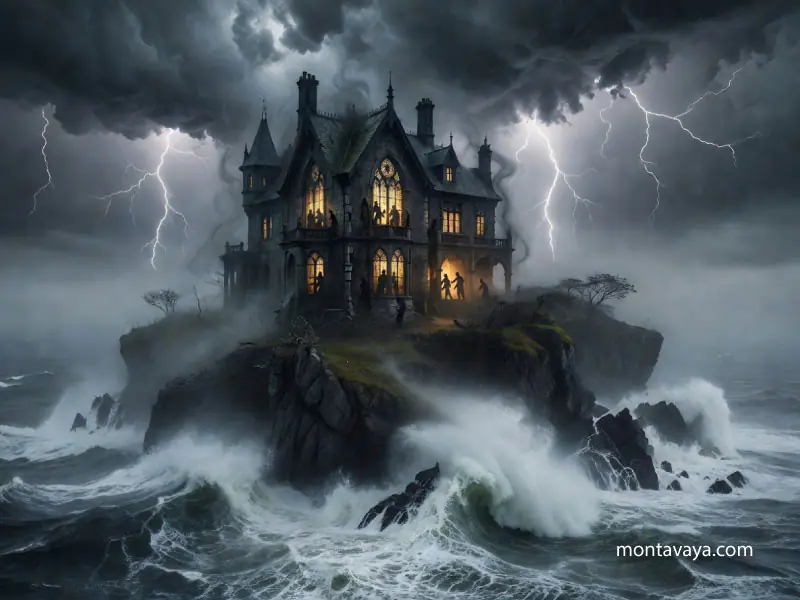
A locked room, ten strangers, and a rhyme that starts to feel less like a nursery verse and more like a countdown. And Then There Were None, written by Agatha Christie and published in 1939, is one of those rare mysteries where the structure itself becomes the star.
One line from the book captures its chilling rhythm: “And then there were none.” It is simple, almost innocent, but within the story, it marks a steady erasure of characters. For readers, the tension builds through isolation and uncertainty. For filmmakers, this creates both an opportunity and a problem. The setup is perfect for cinema, but the ending… not always.
The first major film adaptation arrived in 1945, produced by 20th Century Fox. Interestingly, it did not follow the book’s original ending. Instead, it introduced a more conventional resolution where justice feels clearer and less unsettling. This change was not accidental. At the time, studios were cautious about leaving audiences with bleak conclusions. In simple terms, a darker ending was seen as risky for mainstream viewers.
This pattern continued across several adaptations. Many versions, including later films and television productions, chose to alter the conclusion in some way. The reason is practical. The novel’s ending relies heavily on a final explanation that unfolds through writing rather than action. Translating that into a visual medium without losing impact is difficult, so filmmakers often adjust it to feel more immediate.
A more faithful turn came with the 2015 BBC miniseries, starring Charles Dance. This version made a conscious effort to stay closer to Christie’s original tone, including its darker elements. The longer format of a series helped here. With more time, the story could build tension gradually and preserve the psychological depth that shorter films often trim down.
There is also an interesting layer of controversy surrounding the book itself. Its original title and certain elements have been changed over time due to evolving cultural sensitivities. These changes have carried over into adaptations as well, showing how stories are sometimes reshaped not just for format, but for the era in which they are retold. In other words, adaptations are influenced as much by social context as by creative choice.
In terms of structure, most adaptations remain loyal to the core idea: ten strangers brought together, each hiding a past, slowly being eliminated one by one. However, the pacing and character focus often shift. Some versions speed through the early sections, while others take time to build suspicion among the group, depending on the format.
What makes And Then There Were None particularly fascinating is that it almost invites reinterpretation. The premise is so strong that filmmakers can experiment with tone and resolution without losing the essence of the story. This is not just a mystery about who did it, but about how a story can change shape every time it is told. And it leaves us with a question worth considering: when an ending is altered again and again, does the story become more accessible, or does it slowly lose the very edge that made it unforgettable?
Researched and Written by Shrirang Khare