

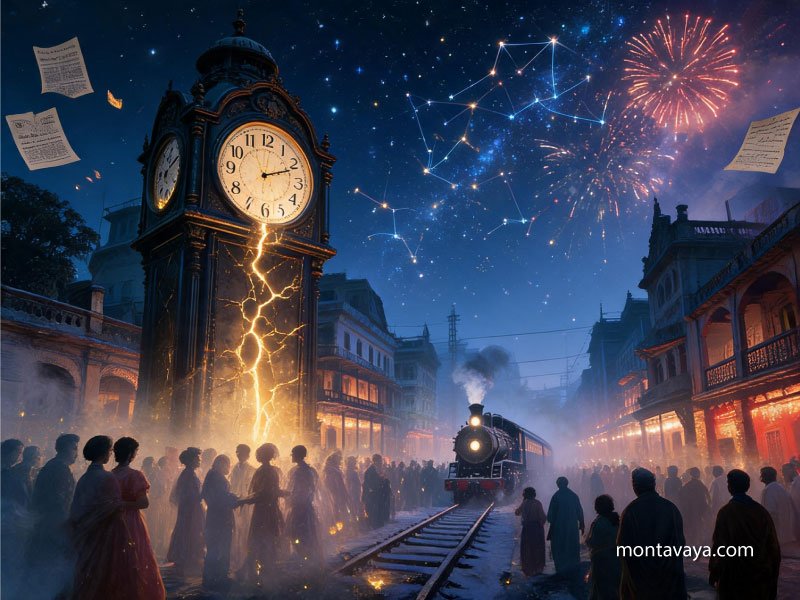
2026/06/02 Midnight’s Children: The Novel That Turned a Nation’s History into a Classroom Debate
Few novels appear on as many university reading lists while also intimidating students before they have even turned the first page. Written by Salman Rushdie and published in 1981, Midnight’s Children is widely regarded as one of the most influential works of postcolonial literature. Yet its place on academic syllabi is not simply due to its awards or reputation. The novel fundamentally changed how many scholars thought about history, storytelling, and national identity.
The book is commonly taught in courses on English literature, postcolonial studies, South Asian studies, history, and cultural studies. What makes it particularly useful in academic settings is its refusal to separate personal stories from national events. Rather than presenting history as a series of dates and political developments, Rushdie explores how historical change affects individual lives. In simple terms, the novel asks whether history is something that happens to people or something people actively help create.
One of the main reasons professors assign Midnight’s Children is its use of magical realism, a literary technique that blends realistic events with fantastical elements. For many students, this becomes their first substantial encounter with the form. Lecturers often use the novel to demonstrate how writers can discuss serious political and historical issues through unconventional storytelling. The magical elements are not simply decorative; they raise questions about memory, truth, and the way nations construct their own narratives.
The novel has generated remarkably different interpretations across generations. Early scholarship often focused on its relationship with postcolonial identity and the legacy of British rule in the Indian subcontinent. Contemporary classrooms still examine these issues, but discussions have broadened considerably. Modern scholars frequently explore questions of migration, fragmented identity, unreliable memory, and the relationship between history and fiction. Some seminars even focus on whether Saleem Sinai, the novel’s narrator, should be trusted at all.
This focus on narration is one reason the book remains academically significant. Students are often surprised to discover that many classroom discussions revolve not around what happened, but around how events are being described. Saleem frequently revises details, contradicts himself, and openly acknowledges gaps in his memory. As a result, the novel becomes an effective tool for teaching narrative reliability and historiography, the study of how history itself is recorded and interpreted.
The book has also developed a reputation among students for being challenging. Unlike shorter texts commonly found on undergraduate reading lists, Midnight’s Children demands sustained attention. Its shifting timelines, large cast of characters, and dense historical references can initially feel overwhelming. However, this complexity is precisely why many lecturers value it. The novel rewards close reading and encourages students to connect literary analysis with broader cultural and historical questions.
In many universities, it has become something of a rite of passage for literature students. It is often one of the first texts where readers realise that understanding a novel may require engaging with politics, history, philosophy, and cultural theory simultaneously.
Perhaps that explains why Midnight’s Children remains firmly rooted on academic bookshelves more than four decades after its publication. It is not merely a novel about history; it is a novel about how history itself is created, remembered, and contested.
And if every generation rewrites its understanding of the past, can history ever be truly objective, or are we all simply telling different versions of the same story?
Researched and Written by Shrirang Khare