

2026/06/02 Anna Karenina: A Classic Retold Through Every Lens
Adapting Anna Karenina into a movie is almost like stepping onto a stage where the audience already knows every line. First published in 1877, the novel carries such a strong reputation that every film version is judged not just as a standalone work, but as an interpretation of a literary giant.
Unlike modern books that are adapted into films after becoming bestsellers, Anna Karenina entered cinema as an already established classic. This changed the stakes entirely. Filmmakers are not trying to introduce the story to audiences; they are trying to present their own take on something people already understand and often feel deeply about. In simple terms, the challenge is not visibility, but interpretation.
Over the decades, the novel has been adapted multiple times, each version shaped by its era. The 1935 adaptation starring Greta Garbo leaned heavily into romance and tragedy. It focused directly and dramatically on Anna’s emotional journey, making it accessible to audiences at the time, though it reduced some of the social complexity present in the book.
The 1948 version, featuring Vivien Leigh, took a more balanced approach. It retained the emotional intensity of Anna’s story while placing greater emphasis on the strict social environment surrounding her. This made the conflict feel more grounded, though the film still had to simplify many parts of the novel due to time constraints.
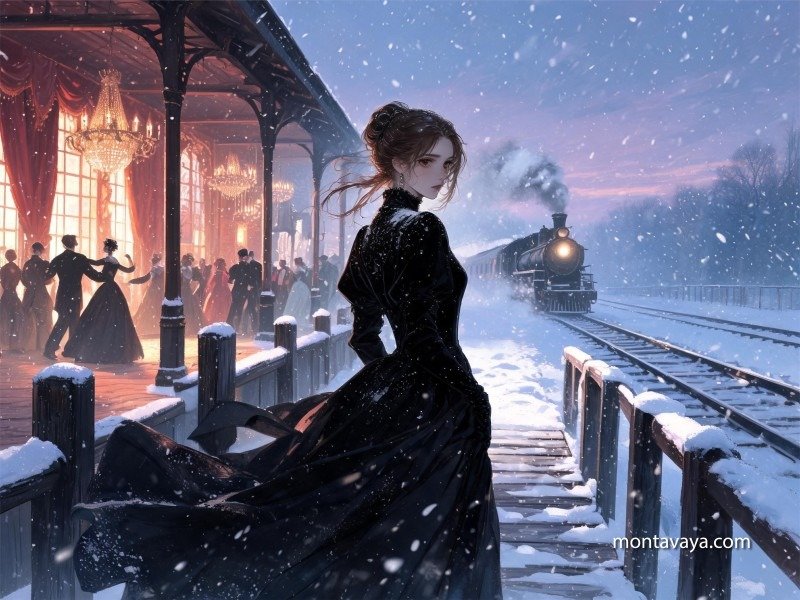
The 2012 adaptation, directed by Joe Wright, stands out for its bold creative choices. Instead of presenting the story in a traditional, realistic setting, much of the film unfolds within a stylised, theatre-like space. This decision was meant to highlight how society itself often operates like a performance, where individuals play roles rather than act freely. While this added a distinct visual identity, it also divided audiences, as some felt it distracted from the emotional depth of the story.
Casting choices have also influenced how these adaptations are received. In the 2012 film, Keira Knightley was cast as Anna, continuing her collaboration with the director. This brought a certain consistency in style, but also led to discussion, as readers often have very specific expectations for such a well-known character.
Across these versions, one thing remains consistent. The central storyline, Anna’s relationship with Vronsky and her gradual isolation, is always preserved. However, the novel’s parallel narrative of Levin, which offers a quieter and more reflective perspective, is often reduced or simplified. This is mainly because films have limited time and tend to focus on the most visually engaging parts of the story. In other words, emotional drama is prioritised over philosophical depth.
This highlights a larger challenge in adapting classic literature. A novel like Anna Karenina allows readers to explore inner thoughts and multiple viewpoints, while a film must rely on what can be shown on screen within a limited duration.
In the end, Anna Karenina continues to evolve through its many adaptations, each one offering a different lens on the same story. It leaves us with something worth thinking about: when a story is told so many times in so many ways, is any single version ever enough, or does its true essence always remain just beyond reach?
Researched and Written by Shrirang Khare